

Lost Your Safe Key? What to Do Next
Losing a safe key can feel urgent, especially if important documents, cash, jewellery or business items are locked inside. The good news is that the next step depends less on panic and more on identifying what information you still have. We Love Keys already offers a large safe-key range that includes Yale safe keys, Phoenix tubular safe keys, MAUER safe keys and many other specialist options, so this is a strong topic for both search and real customer help.
Step 1: Do not force the lock
If you have lost your safe key, the first thing to avoid is forcing the lock or trying random keys. That can damage the lock, the keyway, or the safe itself, and it may turn a simple replacement-key job into a much more expensive repair. The better approach is to stop and gather details: the safe brand, any numbers visible on the keyhole or lock face, and any paperwork or spare keys you might still have. This matters because many safe-key replacements can be ordered accurately once the right code or key type is identified.
Step 2: Check for a code on the keyhole, safe, or paperwork
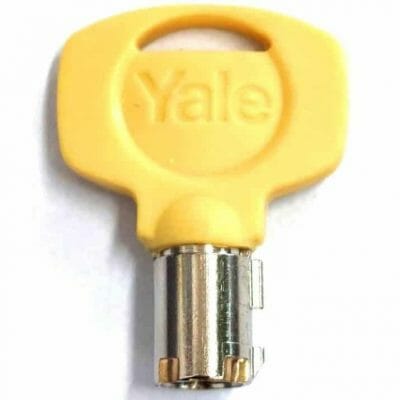
Many customers assume they need the original key in hand to get a replacement, but that is not always true. On We Love Keys’ Yale safe key page, the site explains that the code number is often found on the key itself or on the safe’s keyhole, and that these codes commonly begin with letters such as J, G, P or W. The page also notes that if a Yale code is not on its listed cut-to-code range, the company may still be able to make the key from photos instead.
Phoenix safe keys are another good example of why codes matter. The Phoenix tubular safe key page says these keys typically have a three- or four-digit code written on the keys themselves as well as the keyhole, and it also asks for the safe’s serial number from the sticker on the safe. That means some customers can move straight from “lost safe key” to a replacement order if they still have the code or safe details.
Step 3: Identify the type of safe key you had
Not all safe keys work the same way, and identification is a big part of getting the right replacement. The Safe category on We Love Keys includes tubular safe keys, side-cut safe keys, double-bit safe keys and other specialist safe-key types, across brands such as Yale, Phoenix, MAUER, Lowe & Fletcher, STUV, AGA and Wittkopp. That variety means the safest route is to identify the brand and key style first, rather than searching only by “safe key.”
For example, Yale safe keys are often code-led and may be made either to code or from photos depending on the code and model. Phoenix tubular safe keys require both the key code and the safe serial number. MAUER safe keys, on the other hand, can often be copied from a good photo of both sides of the key, and the product page explains that these keys are commonly used not only in MAUER safes but also in safes made by President, Chubbsafes, Epic Safes and others.
Step 4: Use photos if you do not have the code
If you do not have the code, all may not be lost. The We Love Keys Find the key I need page asks customers to upload two pictures if possible, one from the front of the key and one from the back, along with any brand details and visible code numbers. That same photo-first approach appears on several product pages, especially for keys that can be copied from clear images rather than only from factory records or code cards.
This is especially useful for older safe keys, uncommon brands, or cases where the user has one damaged or worn key left but cannot confidently identify it. In practice, a photo-based route can turn an uncertain enquiry into a clear product match or a guided order.
Step 5: Know when you do and do not have enough information
The key question is whether you still have something usable: a code, a serial number, a photo of the key, a spare key, or a clearly identifiable brand and model. If you have one or more of these, there is a good chance the key can be matched or remade. If you have none of them, the route becomes much harder, because safe-key replacements are usually based on exact references, not guesswork. The We Love Keys product setup makes this clear by asking for codes, serial numbers, or uploaded images depending on the product.
What to do next
If you have lost your safe key, start by checking the safe, lock, paperwork and any remaining keys for a code or serial number. Then identify the likely brand and key type. If you can match it to a product, order directly. If you cannot, use a guided identification route and upload clear photos rather than guessing. On We Love Keys, the strongest next steps are to browse the Safe category, check product-specific requirements on Yale, Phoenix or MAUER pages, and use the Find My Key enquiry form when you are unsure.
Final thoughts
A lost safe key does not always mean a locksmith visit or a lock drill-out is your only option. In many cases, the right combination of brand, code, serial number or clear photos is enough to identify the replacement path. Because We Love Keys already has deep safe-key coverage and a photo-based enquiry flow, this blog should work well as both a helpful guide and a conversion asset for the Safe category.




0 Comments